Why race fuel is dyed, and what the colour is actually telling you
A handful of colours across the range, some of it deliberately colourless. The colour is not branding — it is the fastest check available at a scrutineering bay.
What you can tell before you read a label
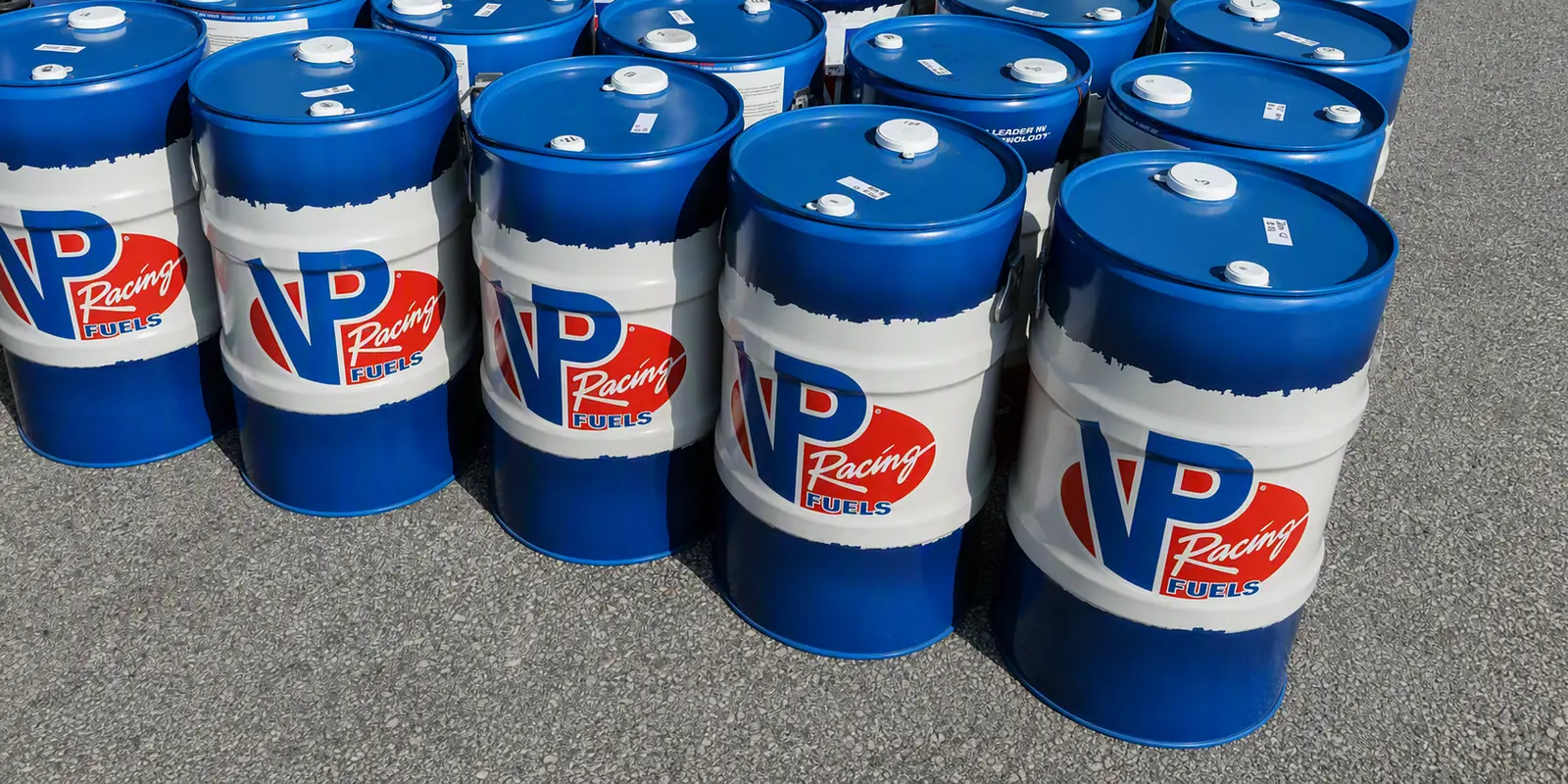
Pull a jug at any paddock in Europe and the colour tells you roughly what is in it before you read anything. Yellow, green, blue, orange, light purple, red — each one is a family of blends with a broadly similar job.
It is a coarse signal on purpose. The colour will not tell you the octane to a decimal place. It will tell you, at a glance across a crowded awning, that somebody has handed you the wrong drum.
What actually identifies a fuel is its label and part number, not the colour: more than one VP blend can be the identical shade of yellow, for instance — C14, Q16, T4 and T2 all are — despite being different chemistries built for different jobs. Colour narrows the search; the label and SKU settle it.
Where the colour stops being convenient and starts being evidence
Sanctioning bodies check fuel. Lead content, oxygen content, specific gravity and dielectric all have to land inside the window tech will measure at the scales, and the colour is the first thing anybody looks at.
A blend that is the wrong colour for the class is a conversation before a single instrument comes out. That is a service to the racer as much as to the organiser: the mistake gets caught in the queue rather than after the result.
Some blends have no colour at all
Colourless is not an absence of information. Many unleaded and oxygenated blends are deliberately left clear, and several classes require it — a dye is a foreign substance, and some rulebooks would rather nothing were added that did not need to be.
So a clear fuel tells you something too: that it is very likely unleaded, very likely built for a class with a tight rule on what may be in the tank, and that the label is now the only thing that will identify it. Clear blends are the ones worth labelling twice.
Every blend VP publishes, with its published specification and who runs it.